EV Road Tripping Is Actually Easy Now
A 950-Mile EV Road Trip From Chicago to Mammoth Caves
Published August 24, 2026
When people talk about going electric, they are often concerned about road tripping. You might think, “an EV might be fine for my daily commute, but can I still make a long road trip for a summer vacation?” I’m here to show you that modern EVs can tackle a road trip incredibly well, especially with the ubiquity of charging infrastructure in the US in 2026.
Table of Contents
What I’ll Cover
- How do you find charging stations?
- How long does charging take?
- How much does charging an EV cost?
- What should you know before renting or buying an EV?
My Previous EV Experiences
I feel pretty confident in saying I’ve got more experience with electric cars than most people, but even most EV owners, because I’ve driven a wide variety of different electric cars over the years. From Chicago, I’ve rented several Tesla Model 3 and Model Ys, three Ioniq 5s, and a Kia Niro EV, which I’ve taken on trips all around the Midwest. Plus I’ve also rented a Chevy Bolt in Washington DC! On top of all that, I am constantly reading all the latest EV and battery news and understand a lot of the technical details on how these cars work and charge, so hopefully I can break it all down clearly.
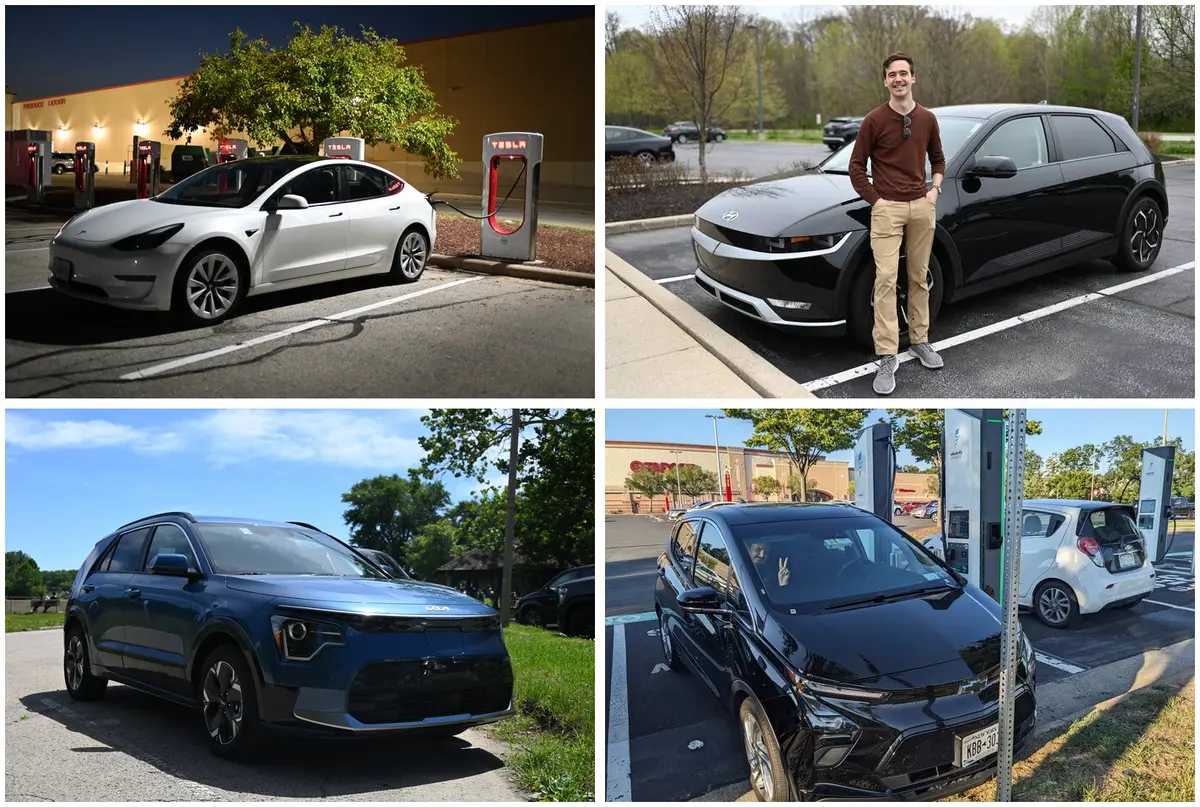
Four different EVs I've rented over the years. Clockwise from top-left: a Tesla Model 3, a Hyundai Ioniq 5, a Chevy Bolt, and a Kia Niro EV.
The Vehicle - The Hyundai Ioniq 5!
For this road trip, I was driving a rented 2023 Hyundai Ioniq 5 SEL AWD, with a 77.4 kWh battery.
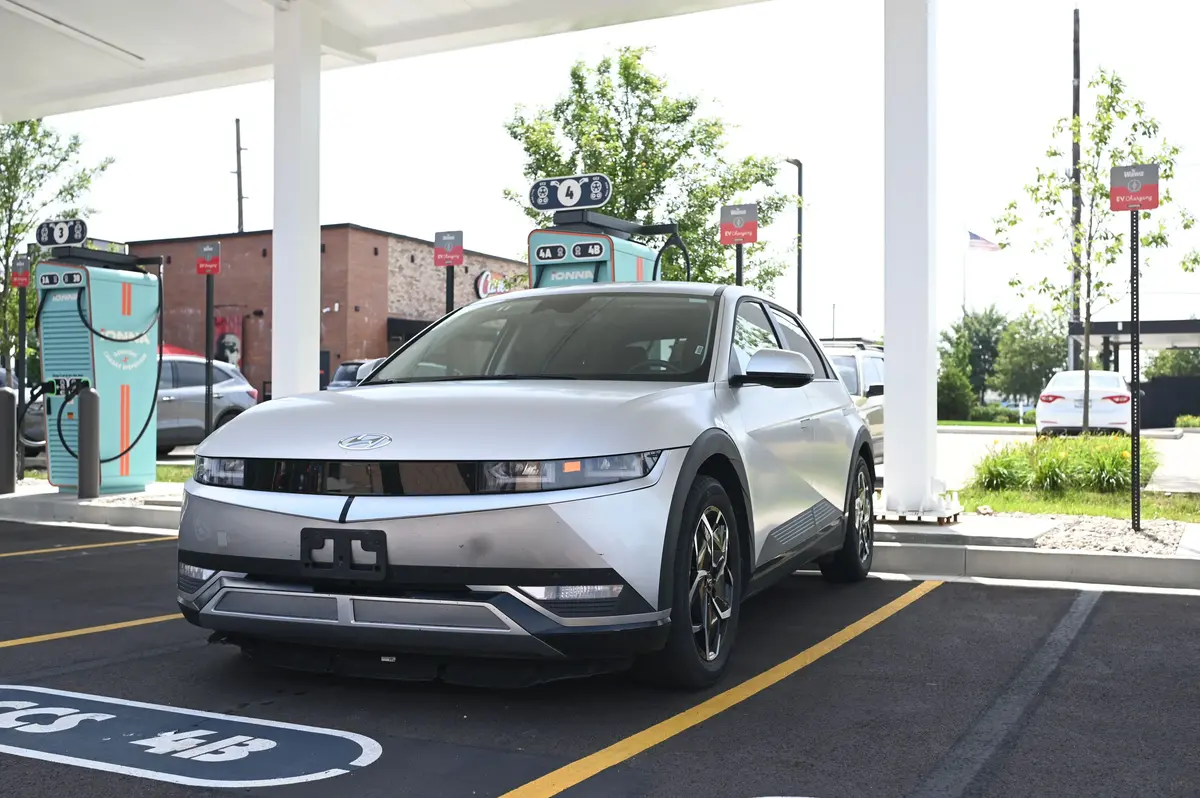
The Ioniq 5 is a very capable but budget-friendly EV - here’s some quick facts:
- Starting Price of ~$37,000 New - starting at $45,000 for the long-range version
- Charges 10% to 80% in About 20 Minutes
- Has an EPA-Rated Range of up to 318 Miles - in a mix of city and highway driving
Since I was driving a 2023 long-range all-wheel drive model, it has a 266-mile EPA range rating. The newer model years have a larger battery for the long-range model, and rear-wheel drive models have that 318-mile range I mentioned above.
The purpose of this article is to show you that road-tripping in an EV is easy and doesn't take up a lot of time, but I'll also be sharing the costs to be transparent. But I want to note upfront that a big way EVs save you money is from the cost of electricity vs gas, which comes from home charging. Fast chargers are expensive equipment with expensive high-powered grid connections, and you pay a premium to use them. Most of the time though, you can just plug in at home, and pay a quarter or a sixth of what I paid at most fast chargers.
Plus, EVs also save you money on maintenance - they've got no transmission, no oil changes, and dramatically less brake wear thanks to regenerative braking!
The Trip
Let’s get started! I’ve made a little progress bar to follow along on our journey.
Day 1: Departing Chicago
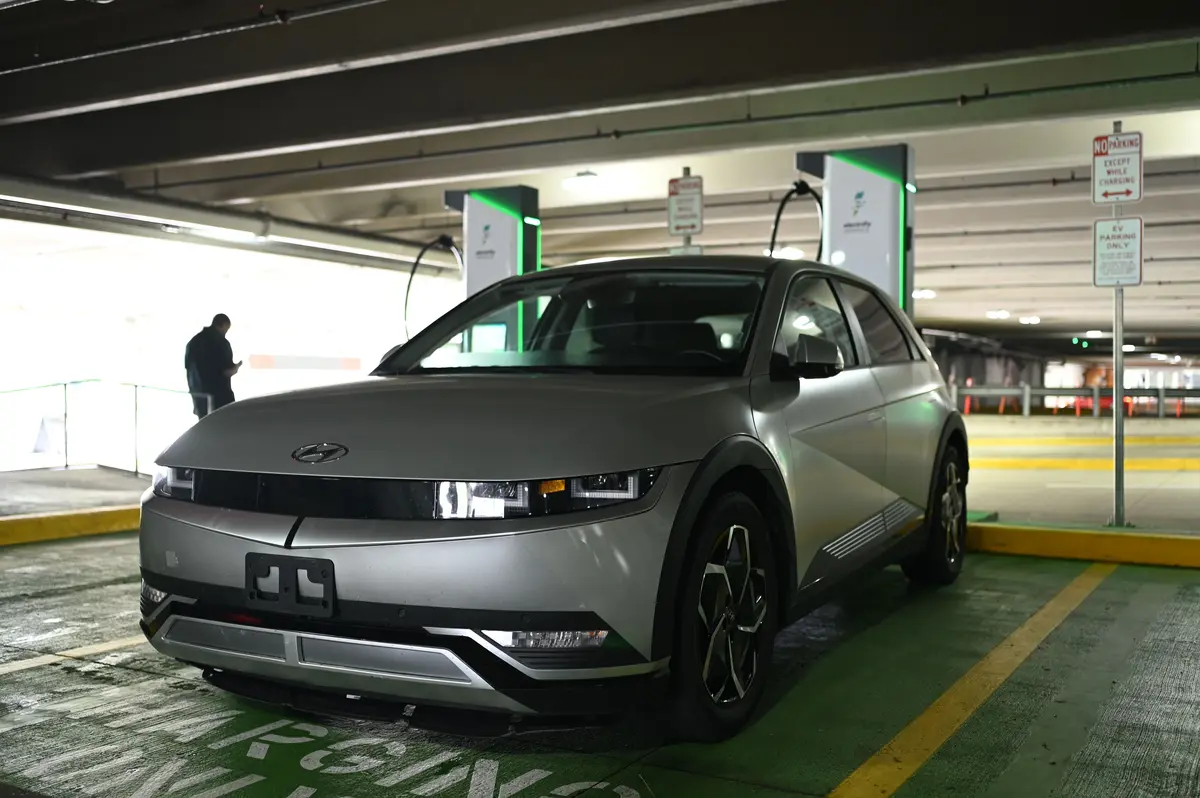
We started our adventure at the Budget location at O’Hare airport, where we picked up our matte grey 2023 Hyundai Ioniq 5 SEL AWD EV.
I was very excited to get an Ioniq 5, but there was one problem - due to a mixup at the rental place, they pointed us to a parking spot where they had chargers, and they had likely moved the car we were supposed to get out and swapped it with a car that needed a charge.
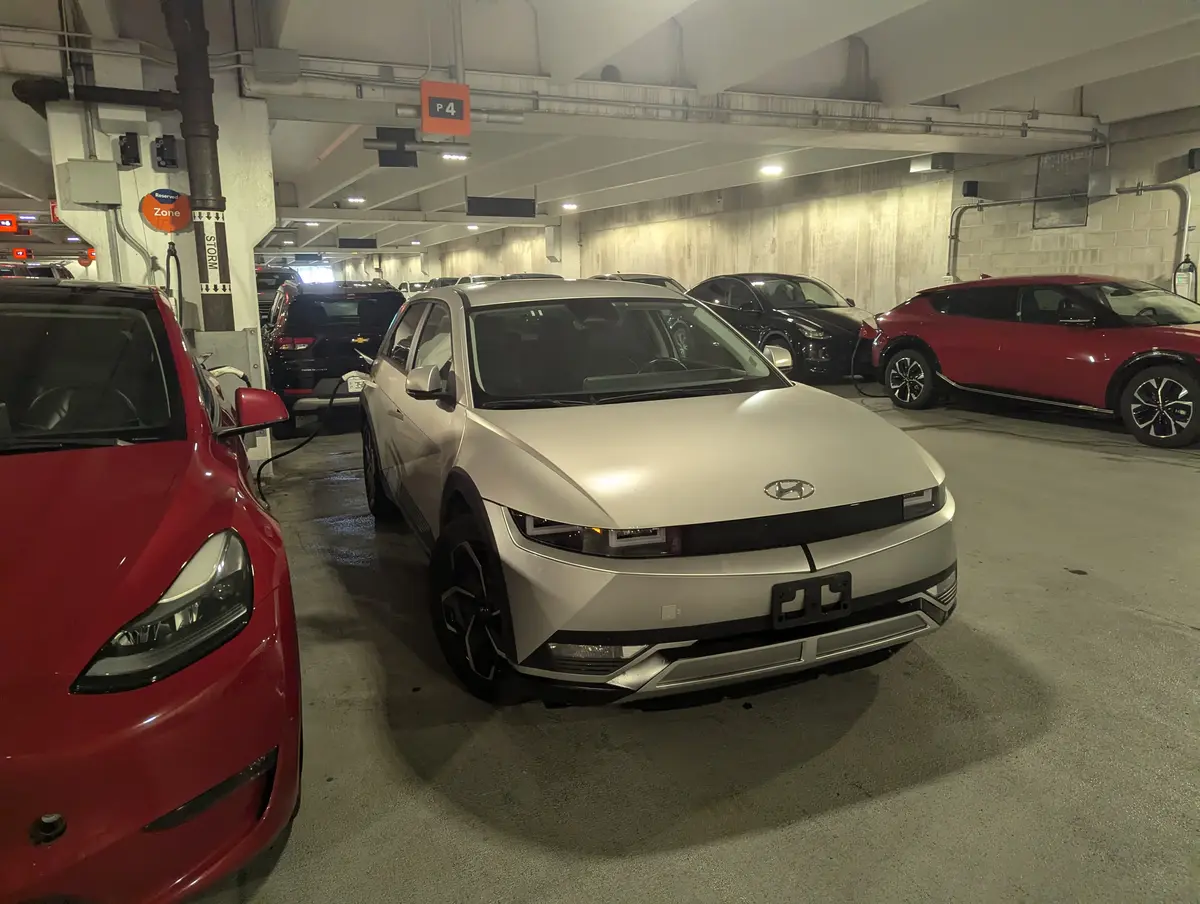
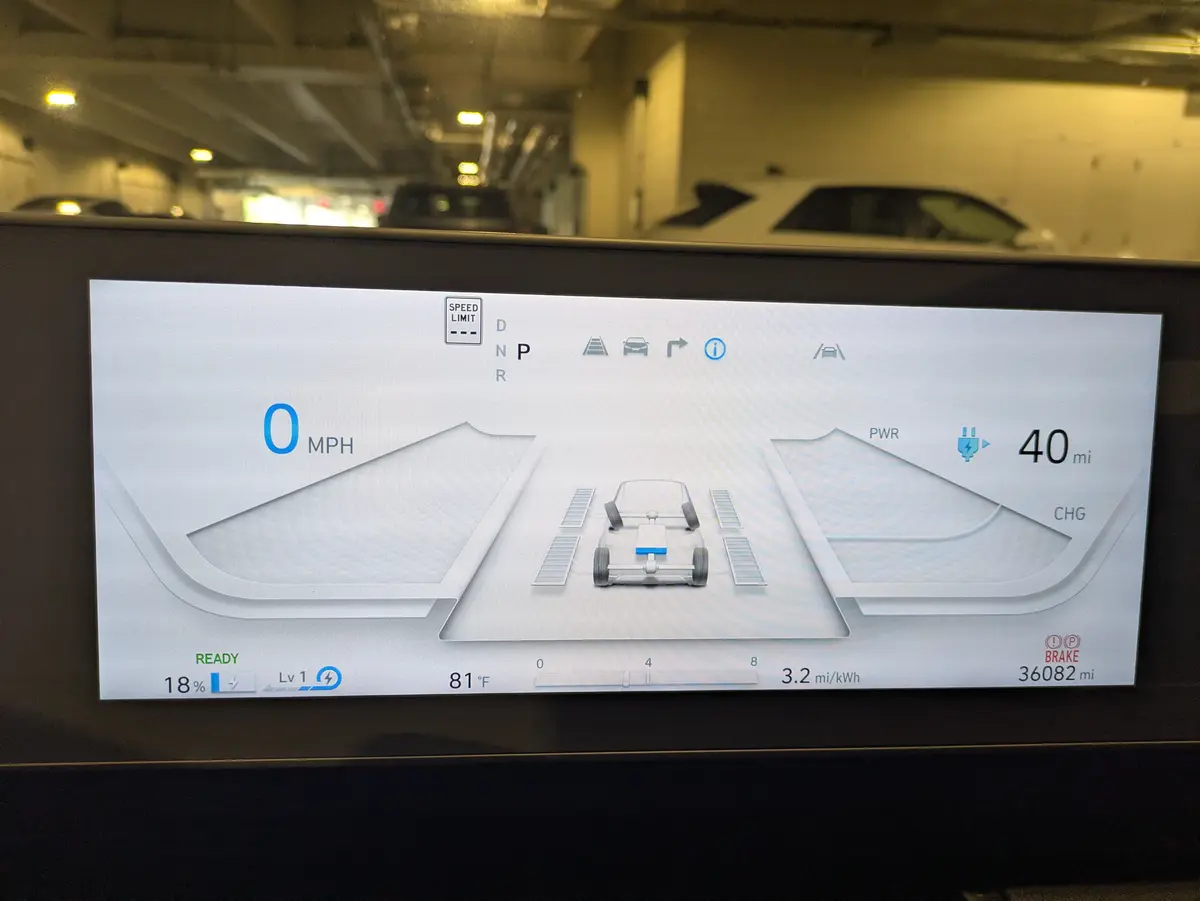
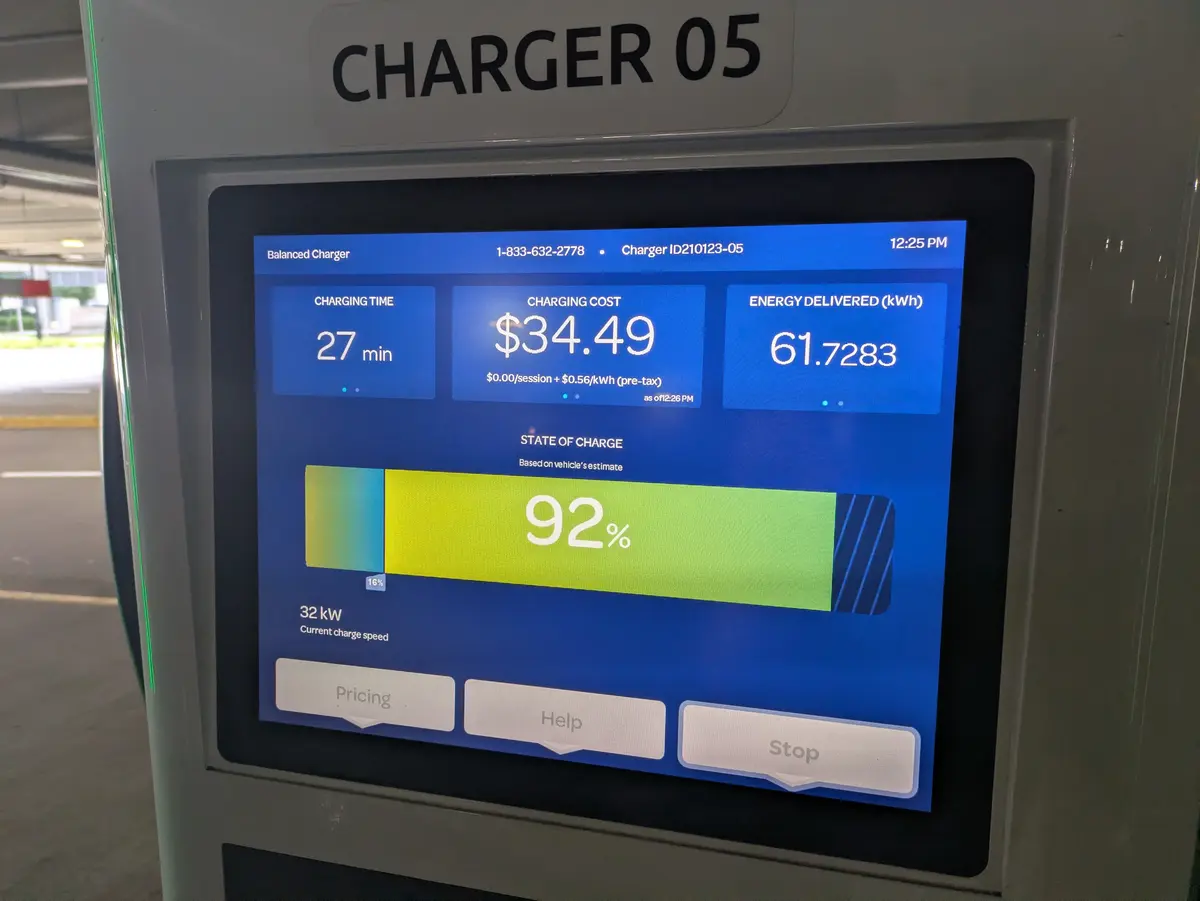
I’ll cover some tips on renting later on, but I was prepared - I’ve rented EVs a lot from the O’Hare, and knew that there’s an Electrify America fast-charging station in Rosemont at the Fashion Outlets Mall, just a few minutes and a few miles away from O’Hare. So we drove over there, plugged in the car, got some coffee and used the bathroom, and 27 minutes later were back on our way!
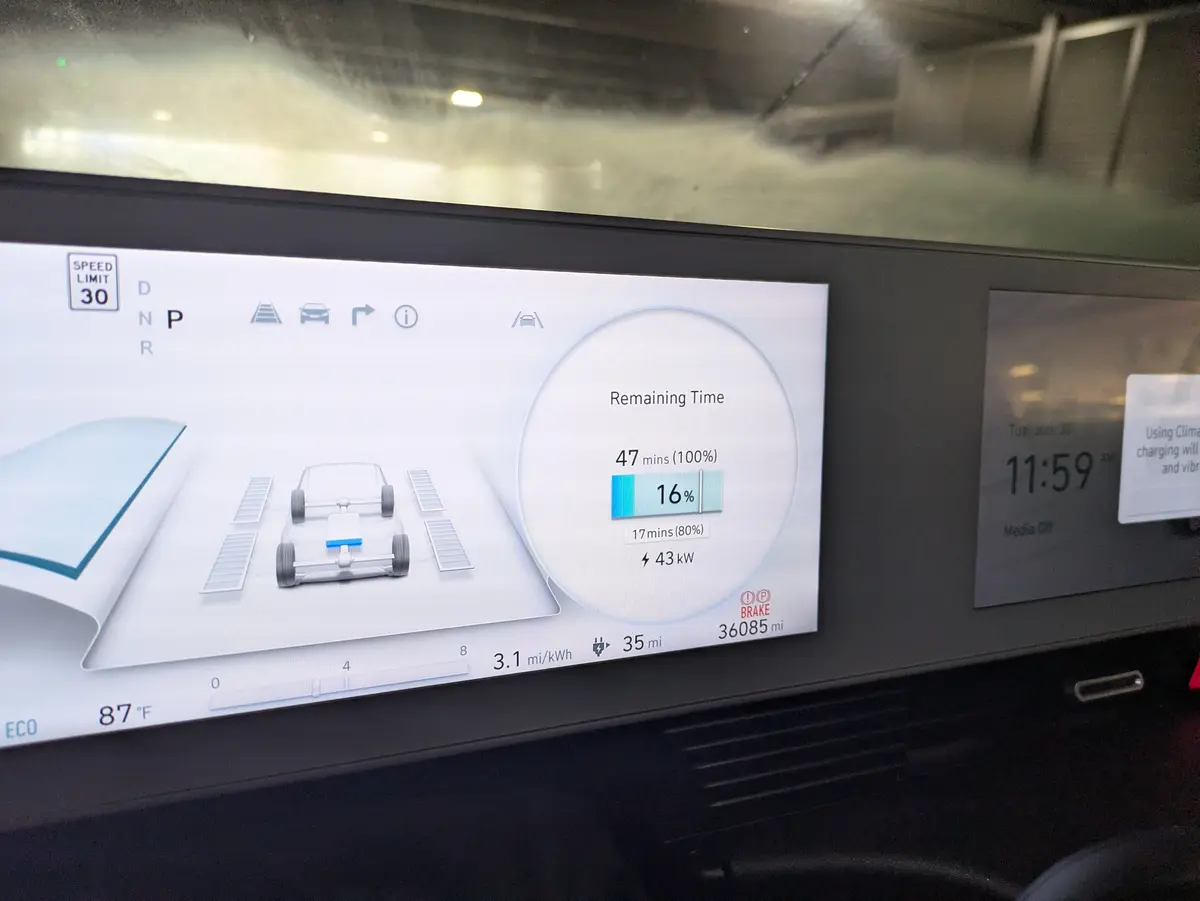
Charging Stops
Now that we had a full charge in Rosemont (92%), we were ready to drive to Kentucky! From Rosemont, our hotel in Munfordville, Kentucky is a 400-mile drive, and we only needed to stop to charge twice!
Now, you might be thinking - if the Ioniq 5 we were driving had a 266-mile EPA range, why did we need to stop twice? That’s because an EPA range is a mix of city and highway driving, and so exclusively driving on a highway, EVs usually have a roughly 30% range penalty. In my experience, this 2023 Ioniq 5 SEL AWD got a 200-mile highway range, so to safely make a 400-mile journey (especially since you rarely charge an EV fully to 100%) and have charge when we got the hotel, we needed to stop twice.
As you’ll see though, with a modern EV (especially an 800-volt car like the Ioniq 5) charging stops are really no problem - and we usually needed to eat or use the bathroom anyway! Nine times out of ten, by the time we were ready to go, the car was already charged to 80% like we needed.
How Do You Find Charging Stops?
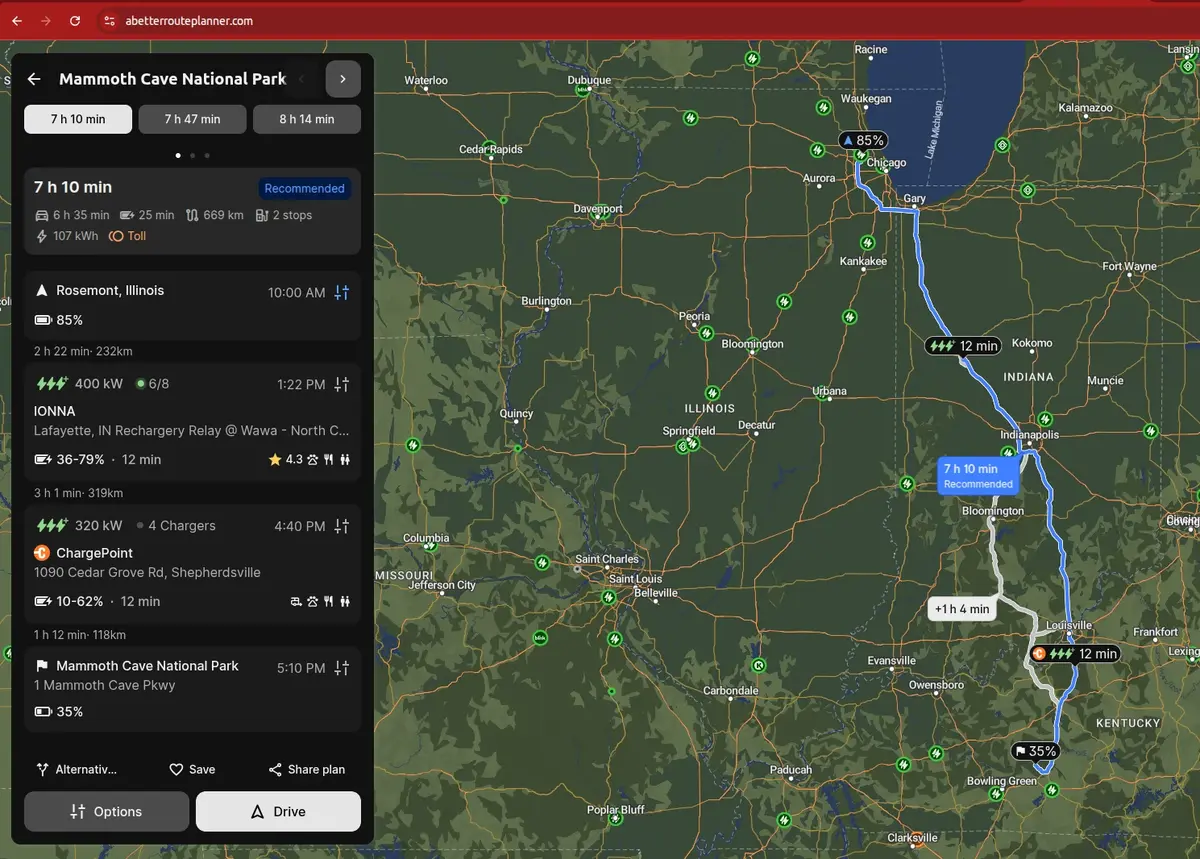
To find charging stops, I used A Better Route Planner, which is widely regarded as the best app for planning out longer road trips - you put in what car you have, its state of charge, and your destination, and it’ll plan out what stops you need to make to get to your destination with your desired state of charge! Here’s a screenshot of a plan it drew up from Rosemont to Mammoth Caves:
Do You Need An App To Pay For Charging?
Nope! Although a lot of Level 2 chargers still often require an app (unfortunately), most fast chargers, including all the ones I used on this trip, had standard credit card readers, so you can just tap and go.
Some EVs and charging networks also support plug-and-charge, where you put payment info into your automaker’s app, and the charging station automatically bills you through that, so you just plug in and the car starts charging. This was first popularized by Tesla (who could do this more easily because they built the cars and the chargers) but has slowly spread through standardization.
Stop 1 - Ionna in Lafayette, Indiana
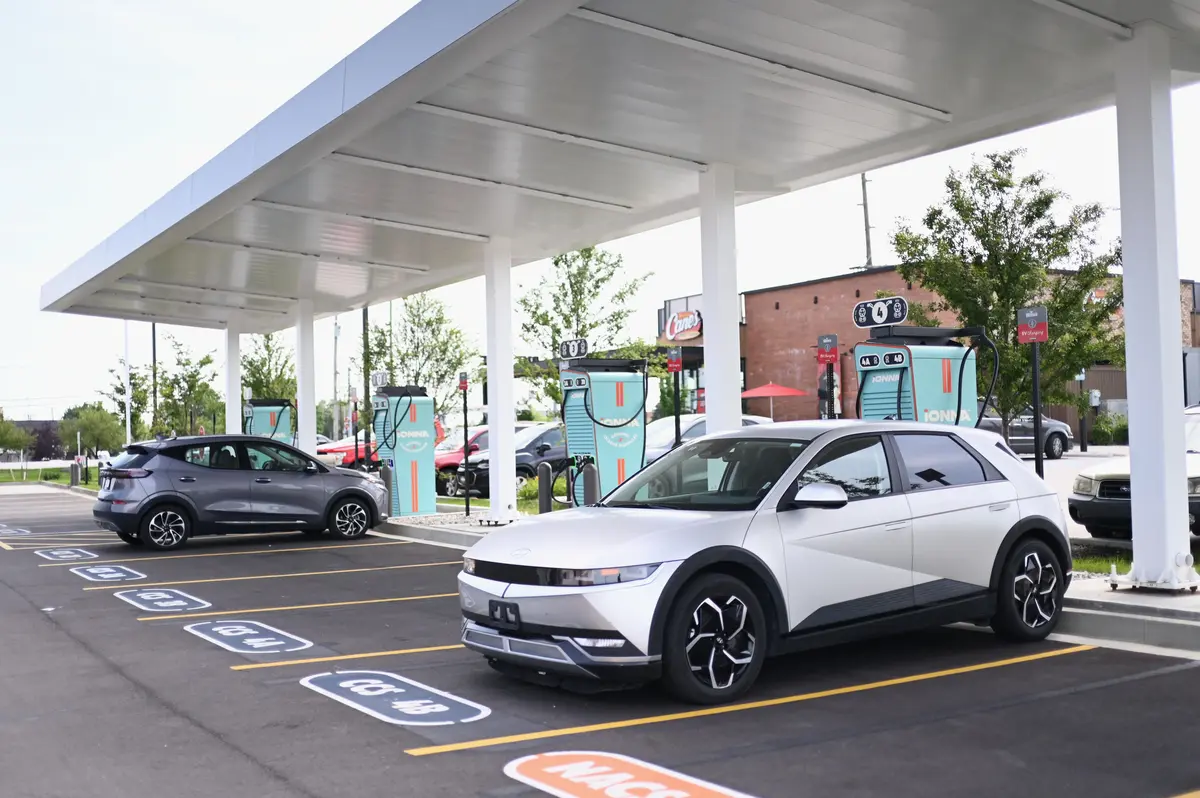
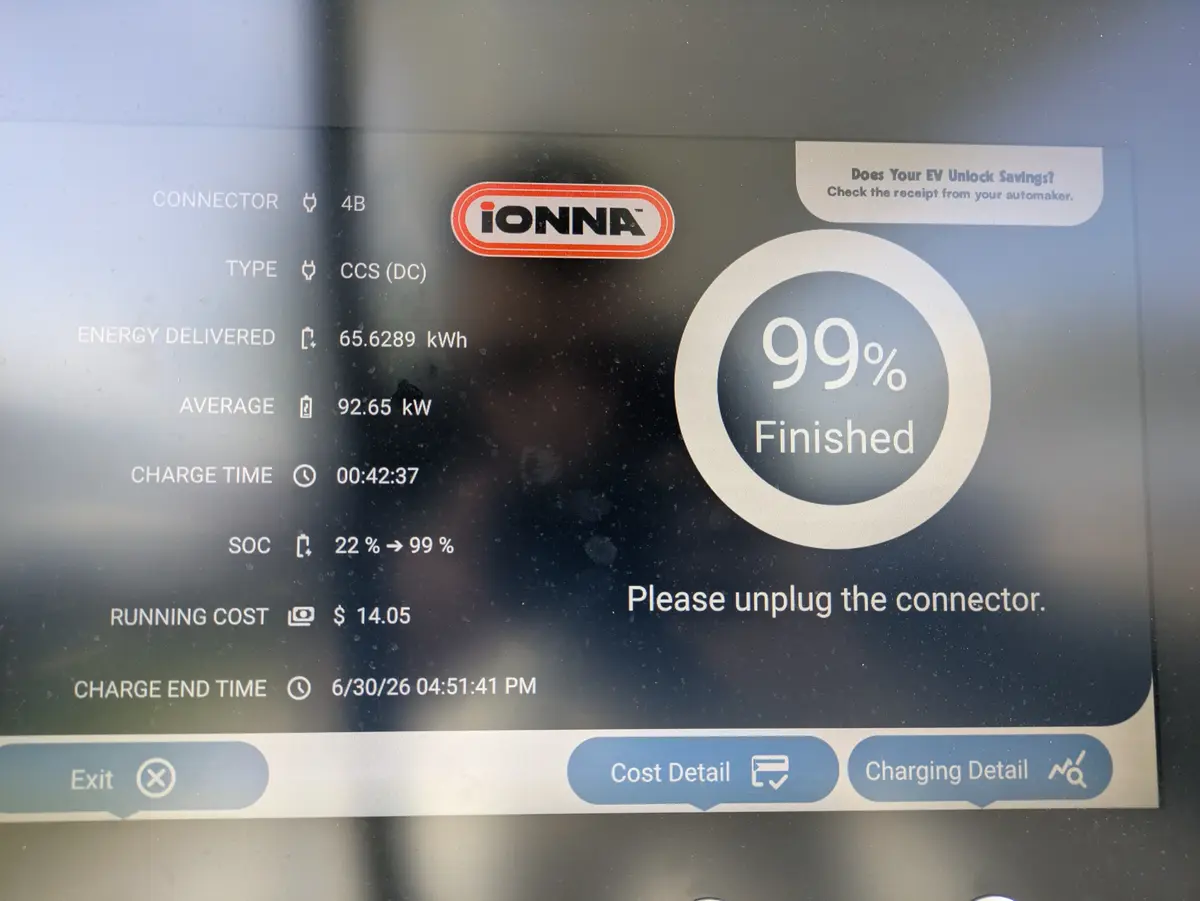
143 miles from Rosemont at 4:48pm Eastern, we ended up at a brand new Ionna charging station in Lafayette, Indiana with still 22% charge left. This station opened in late June, just a week before we got there on July 1st.
Ionna is one of the newest charging providers, started in February 2024 and opening their first location in February 2025.
Because they had just opened, Ionna actually had a 20 cent/kWh deal, and we only paid $14.05 for that full charge - talk about a deal! Even if gas was let’s say $3 a gallon in Indiana (I didn’t get a photo of gas prices nearby, but in late July after more gas price rises, $3.50 was in the area), that’s ~4.7 gallons of gas, only enough for 117 miles in a car of average gas mileage (25 mpg).
We ended up charging for 42 minutes in Lafayette, but that’s not because the car needed to - if we were really rushing, we’d hit 80% and keep going, since all EVs (and all battery-powered devices) dramatically slow down their rate of charge over 80%. But since we were eating a late lunch at the attached Wawa, we just ate our meal and came back to a fully charged car!
Stop 2 - Electrify America in Clarksville, Indiana
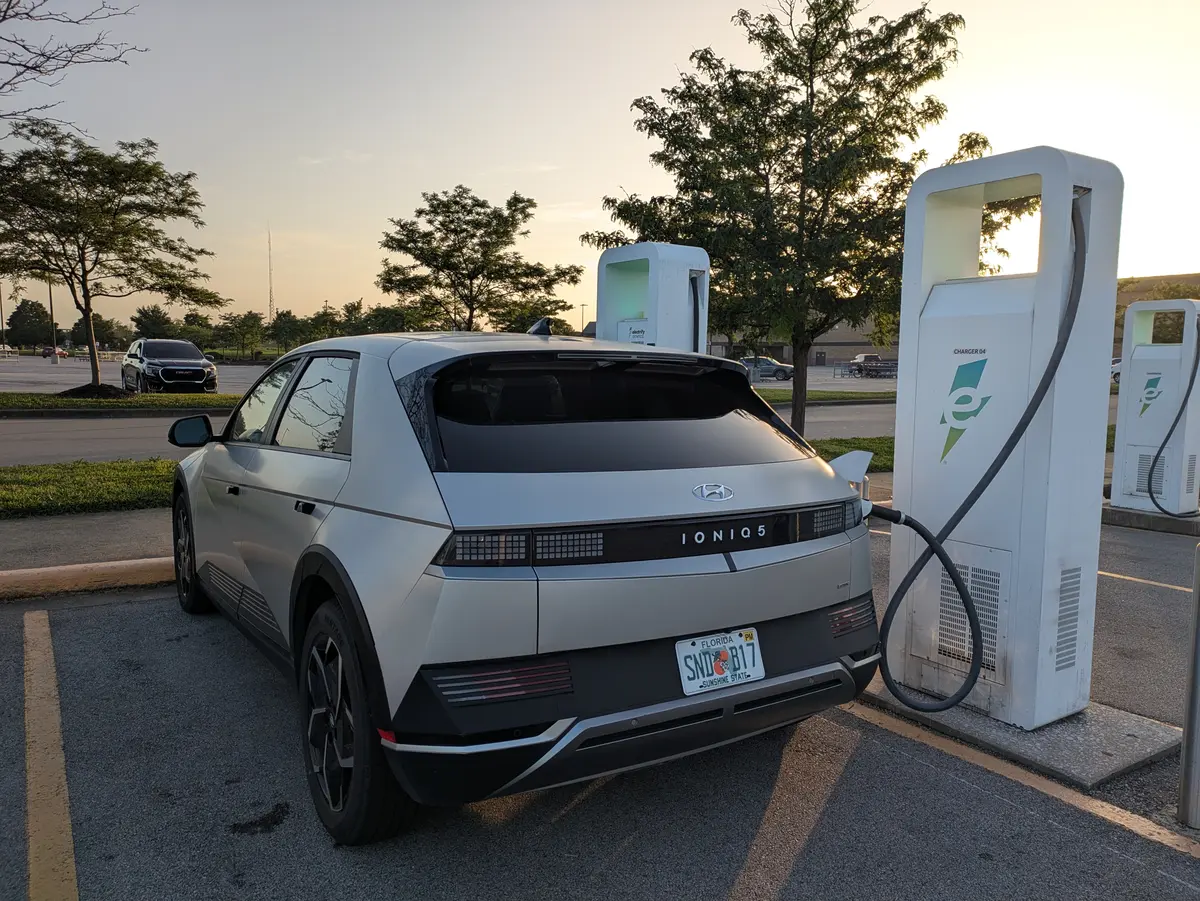
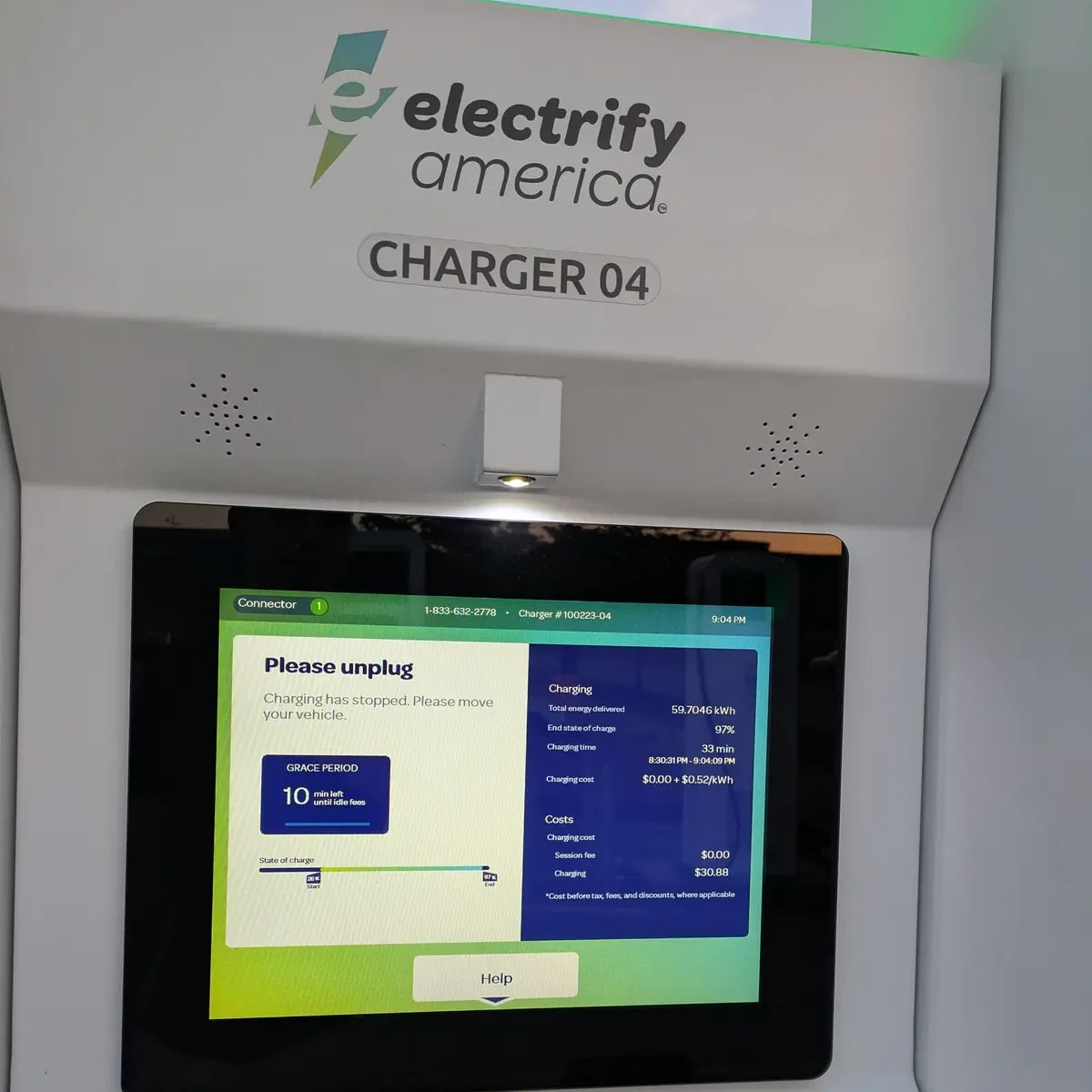
At 8:25pm Eastern, 171 miles from our charging stop in Lafayette, we ended up at an Electrify America station in Clarksville, Indiana with 26% charge left - we stopped in the Walmart, used the restroom, and ate some food, and the car got 97% charged, in 33 minutes! Similar to before, we weren’t waiting on the car, and from 27% to 80% the car itself estimated it would take only 16 minutes to charge - but we had to eat!
Arriving in Kentucky
After a 78-mile drive, we then got to our hotel at 9:38pm Eastern time with 68% charge - plenty for our adventures! You might notice that’s a pretty large range drop for that distance, but I was probably driving a little faster than before, since we had plenty of charge to get back to the hotel.
Pro Tip - Speed is a huge factor in EV range! Gasoline is incredibly energy dense, so we often don’t realize just how much leeway it gives us. For context, one gallon of gasoline is equivalent to 33 kWh of energy (source), which means our Ioniq 5, with its 77.4 kWh battery, was carrying the energy equivalent of just 2.3 gallons of gas, but it can go nearly 270 miles on that amount of energy! That’s the equivalent of a whopping 115 MPG.
Mammoth Caves
During the day, we drove 22 miles from our hotel to the cave visitor center and then 22 miles back, and ended the day at 51% charge. No charging was involved, but since that was the point of this whole road trip, here’s a few fun photos!



Day 3: Leaving Kentucky
We had to make a detour on our way back home to visit a friend in Lexington, which would add 100 miles to our journey back. Since the car was at half charge and Lexington was 110 miles away, it would have been possible to make it to Lexington, but we would have had very low charge, so we looked for the closest charger to our hotel. Turns out even in Kentucky, there was a fast charger just 17 miles away!
Return Charging Stops
Stop 1 - Pre-Trip Top Up at Pilot Flying J in Sonora, Kentucky
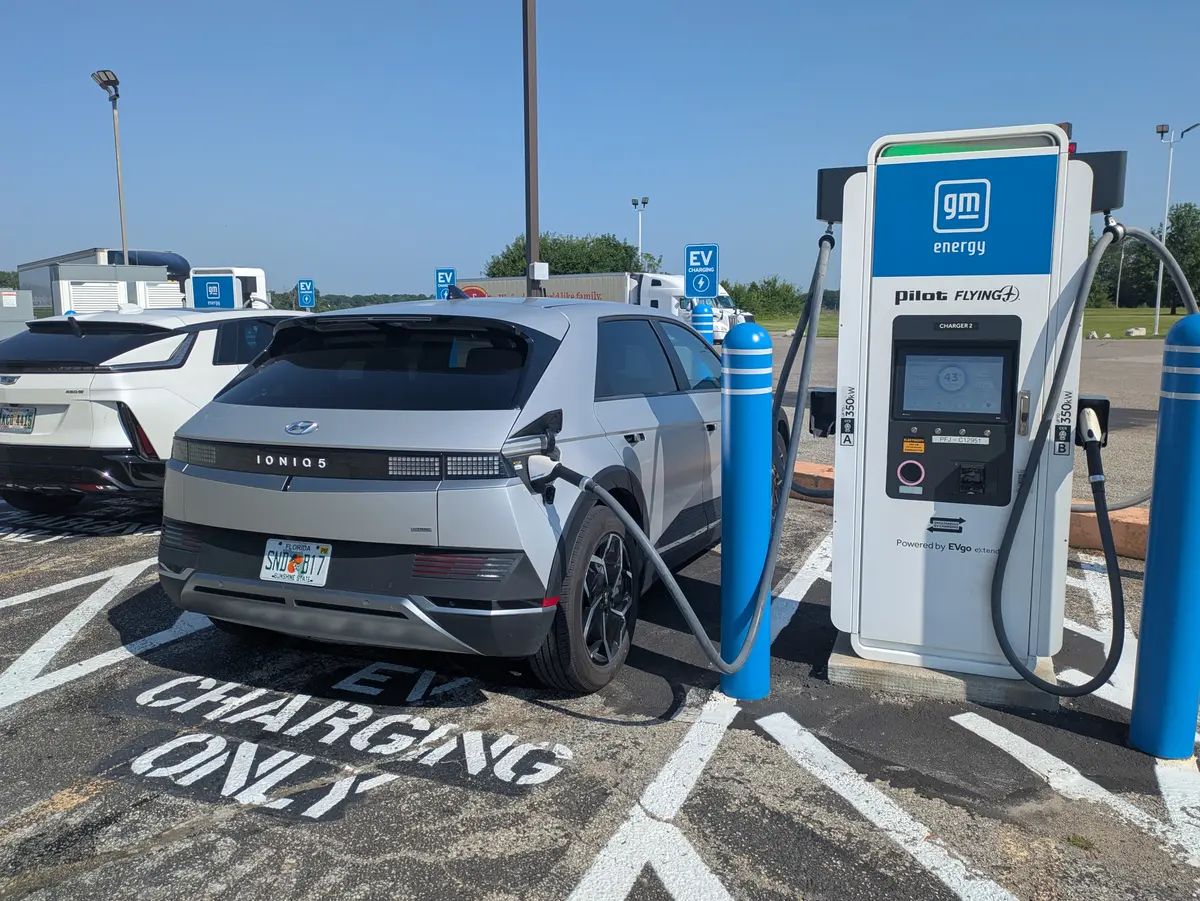
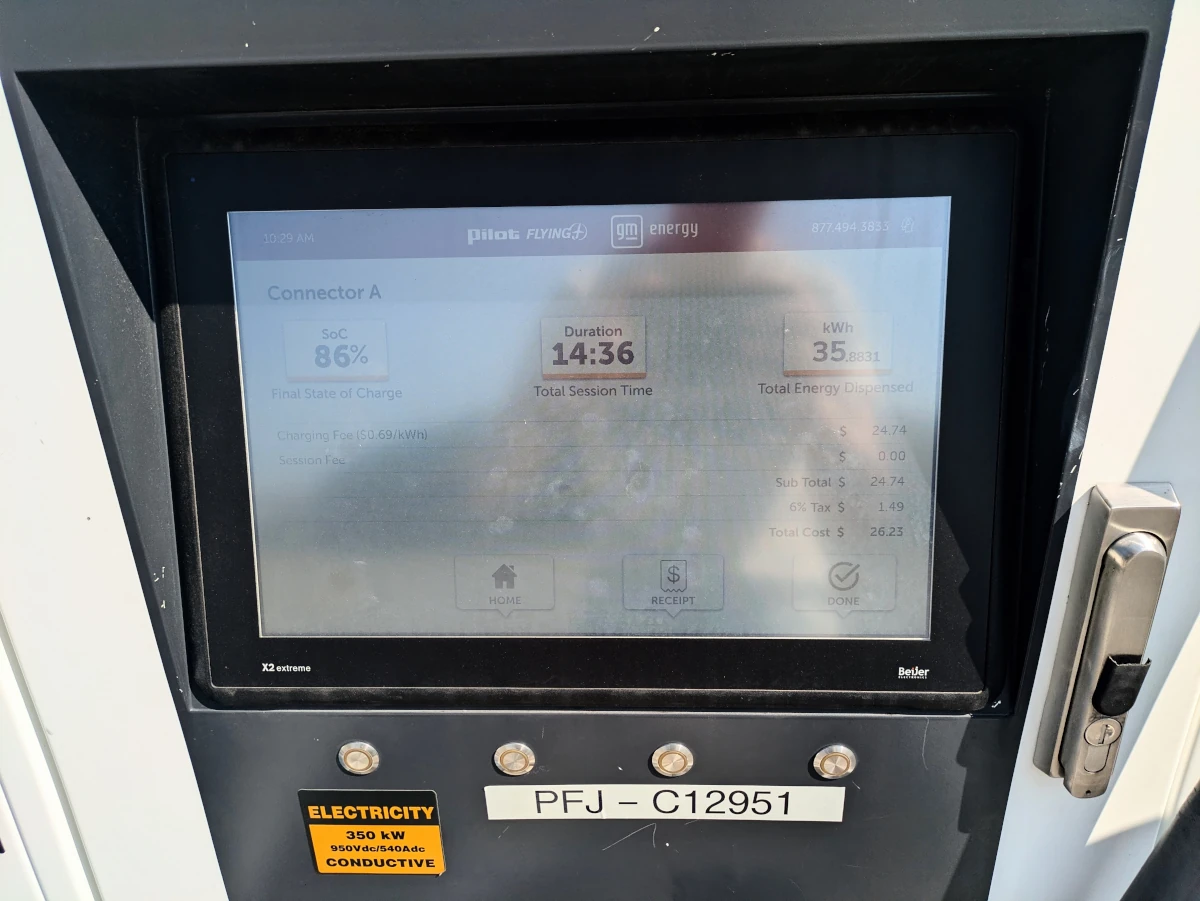
As mentioned above, there was a charger just 17 miles away from our hotel, just a short drive away. This was a Pilot Flying J truck stop in Sonora, Kentucky, and we made a very short stop - since we arrived with 43% charge, in just 14 minutes we charged to 86% for a cost of $26.23.
Lunch in Lexington (110mi from Sonora)
Next up, our detour - no charging involved, but we drove over to Lexington to meet a coworker, eating up 110 miles - we still had plenty of charge in town (around 40%), but that meant we’d need to make another stop somewhat shortly.
Stop 2 - Pilot Flying J in Waddy, Kentucky
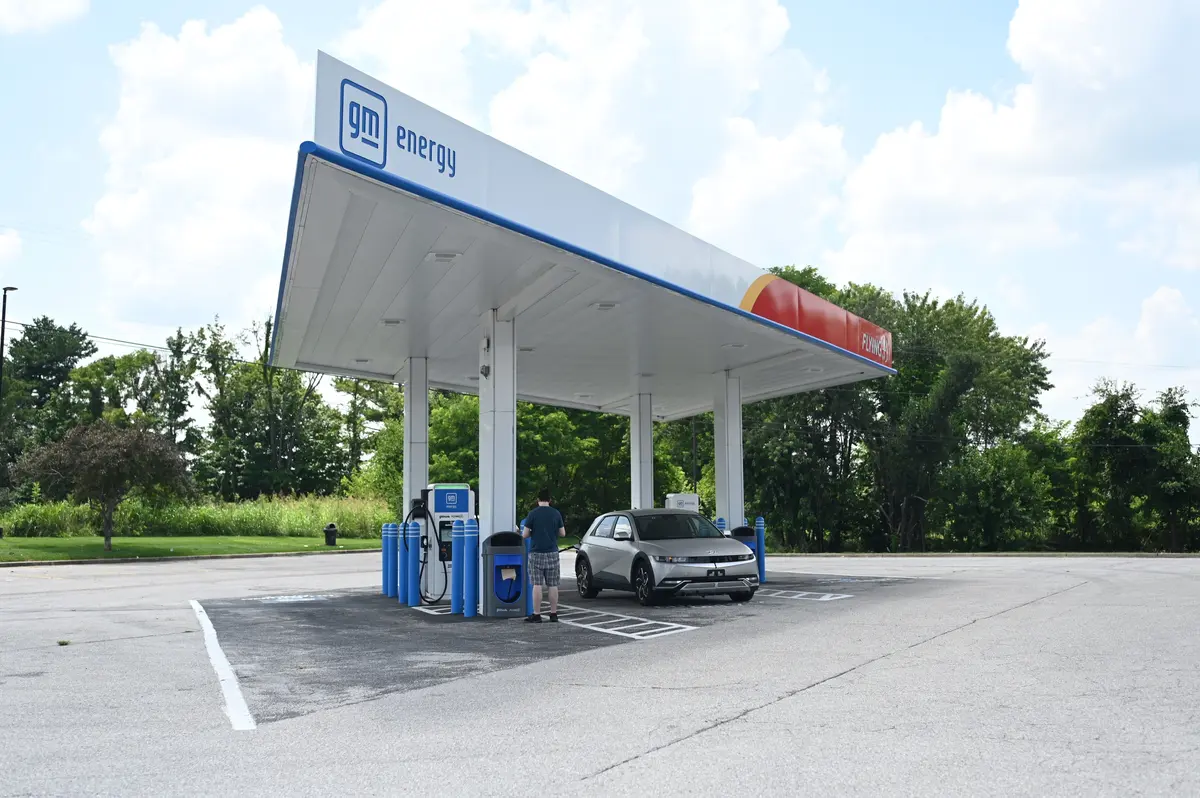
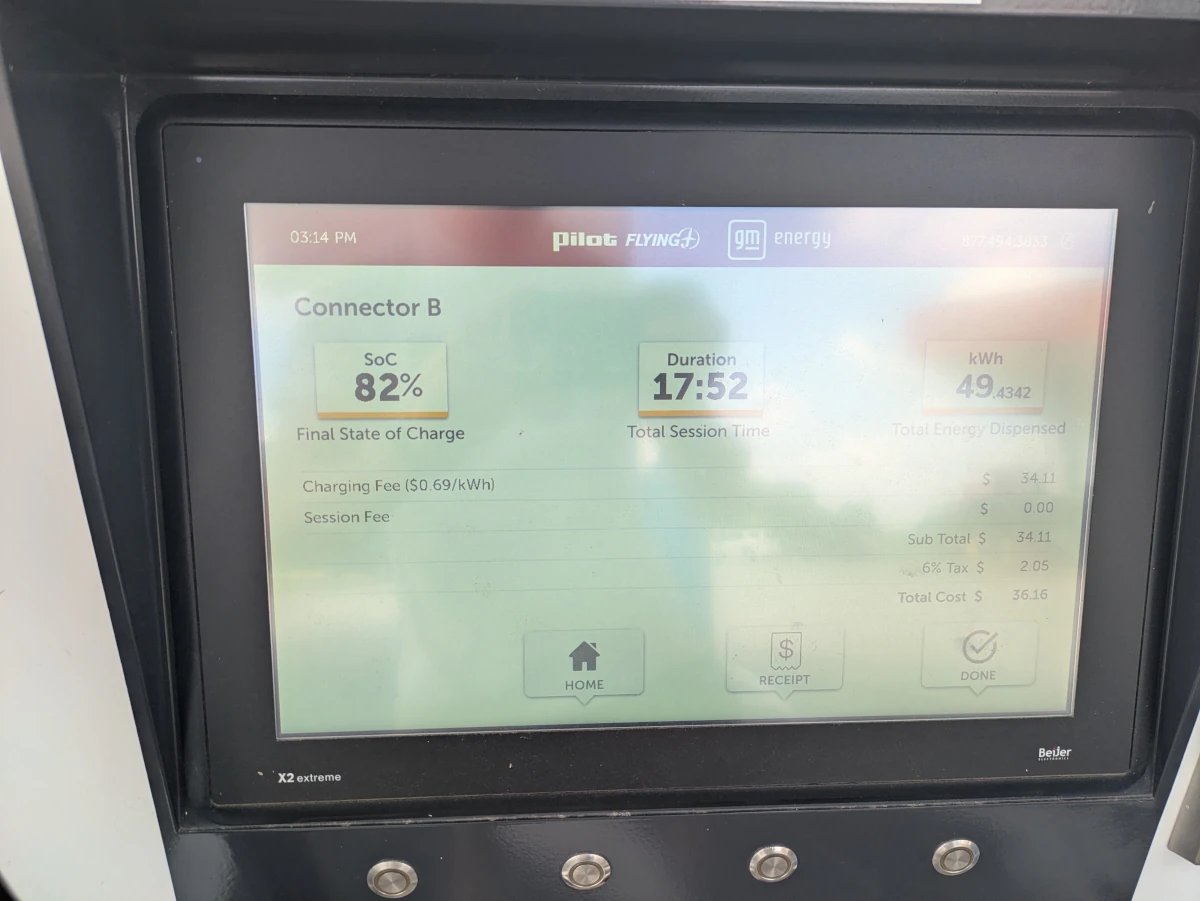
After a nice ride through some countryside to check out some horses, 36 miles away from Lexington we got to a Pilot Flying J in Waddy, Kentucky. We charged for 18 minutes, getting from 24% to 82% for $36.16.
Stop 3 - Electrify America in Indianapolis
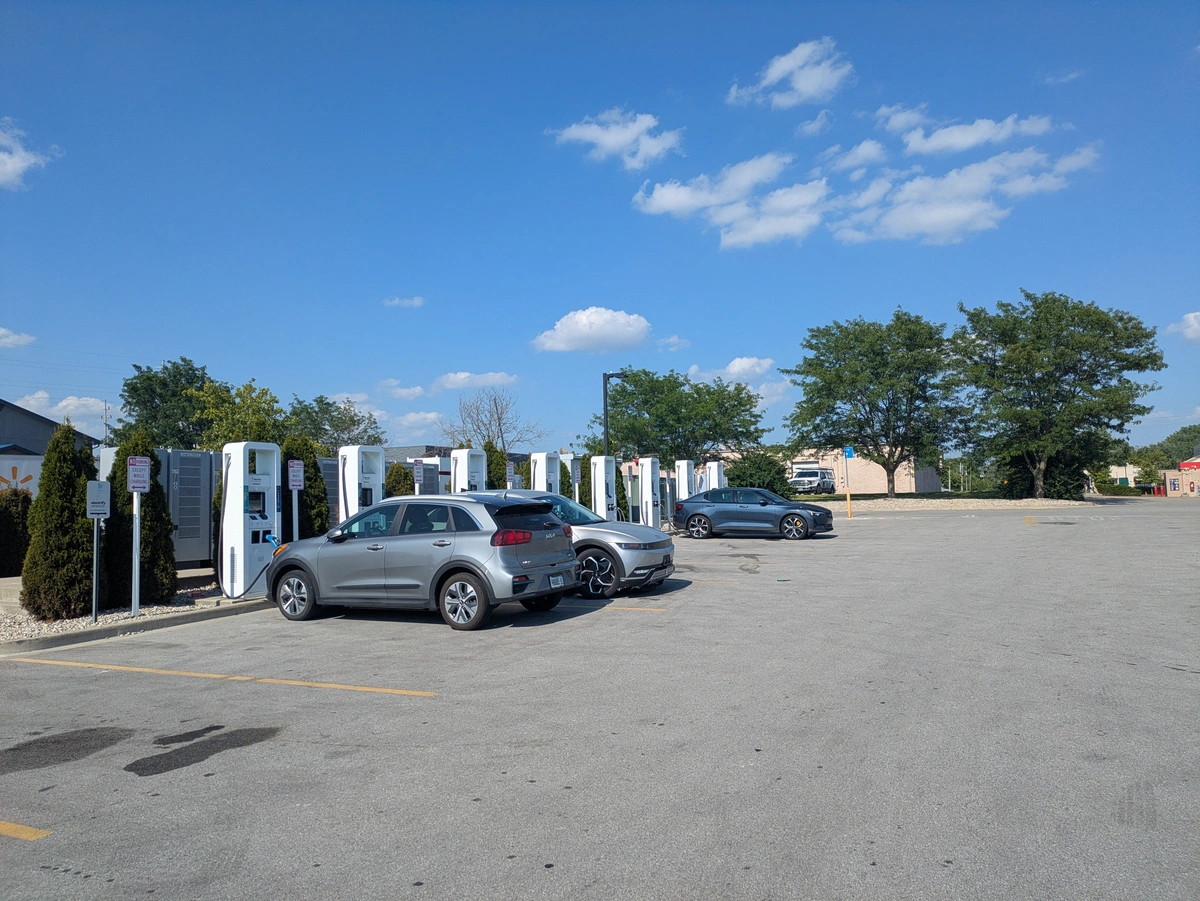
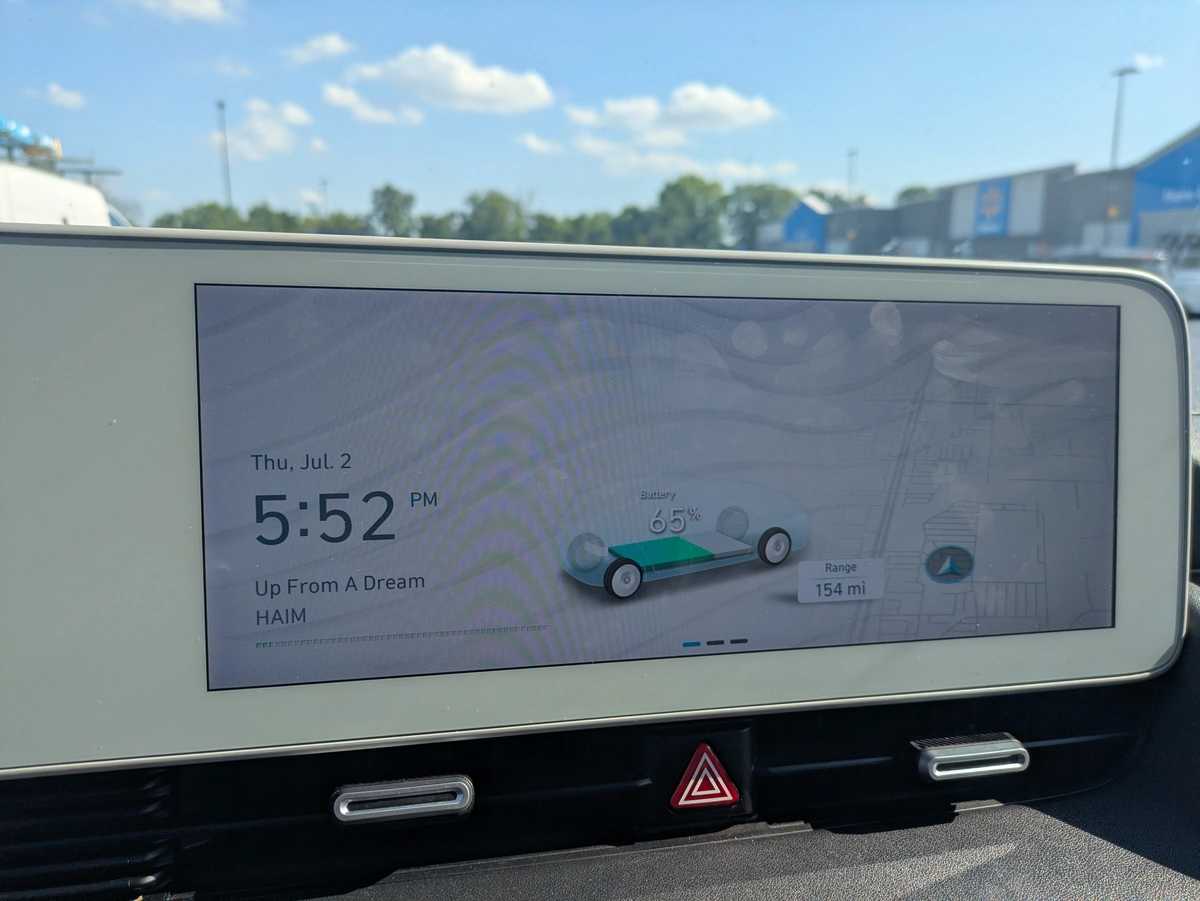
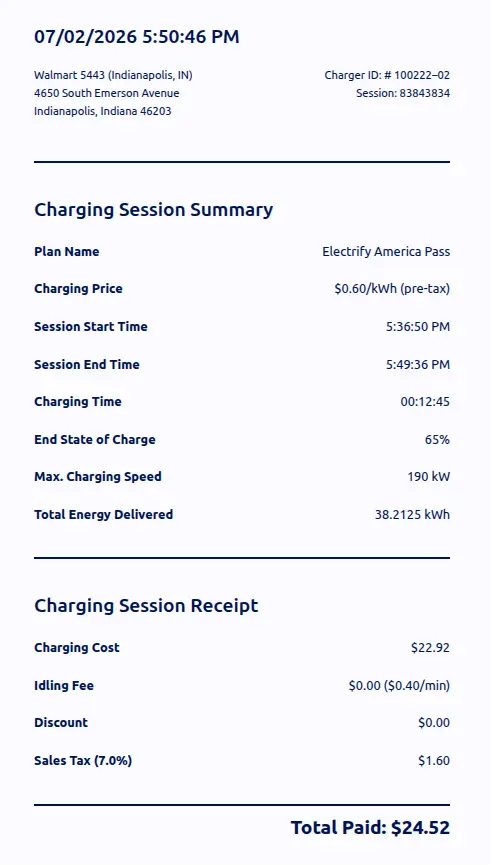
146 miles away from our last stop, we got to an Electrify America station on the Southern end of Indianapolis (technically in Beech Grove). Since I knew that further North were the new Ionna stations with discounted charging, I specifically stopped for as short a time as possible. We arrived with 19% charge, but only stayed for 13 minutes, getting us 65% charge to get to our next stop, for $22.92.
Stop 4 - Ionna in Lafayette, Indiana
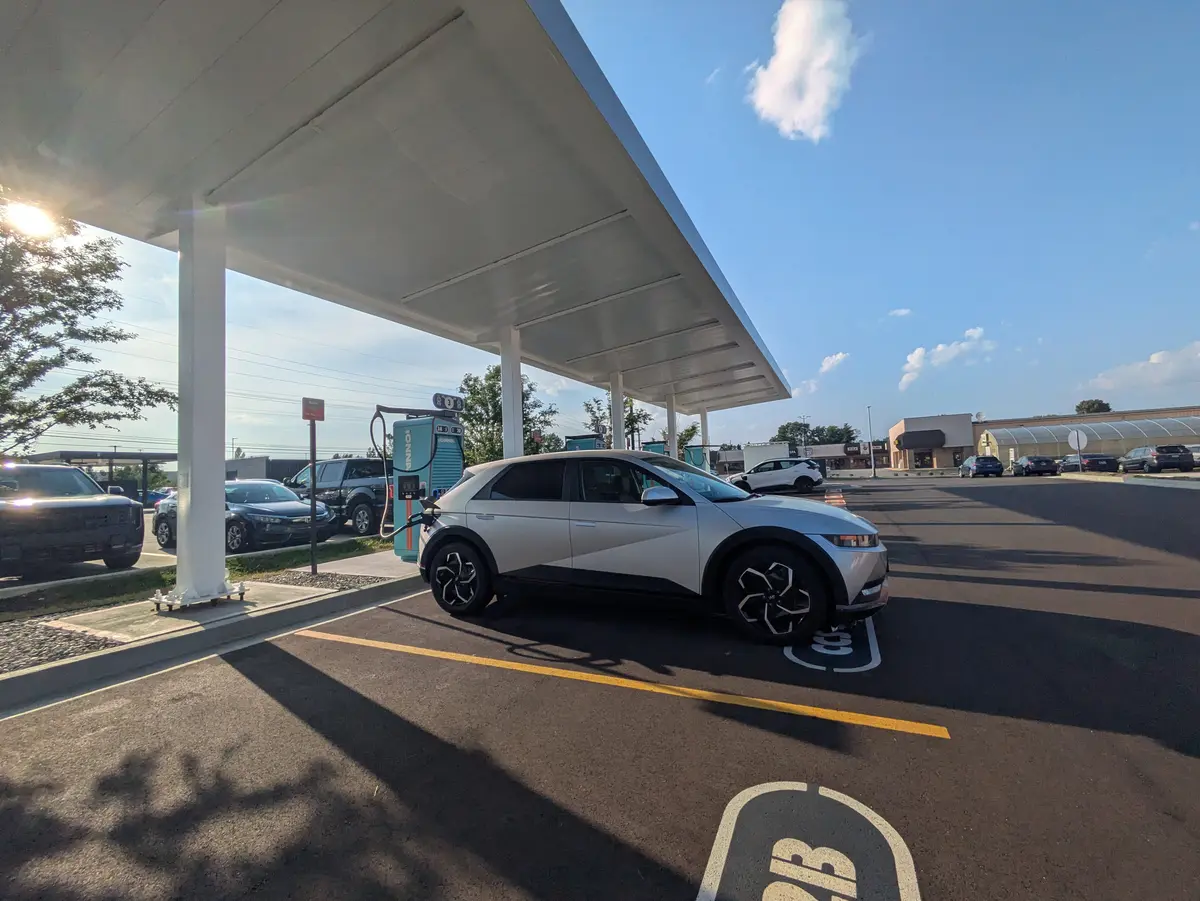
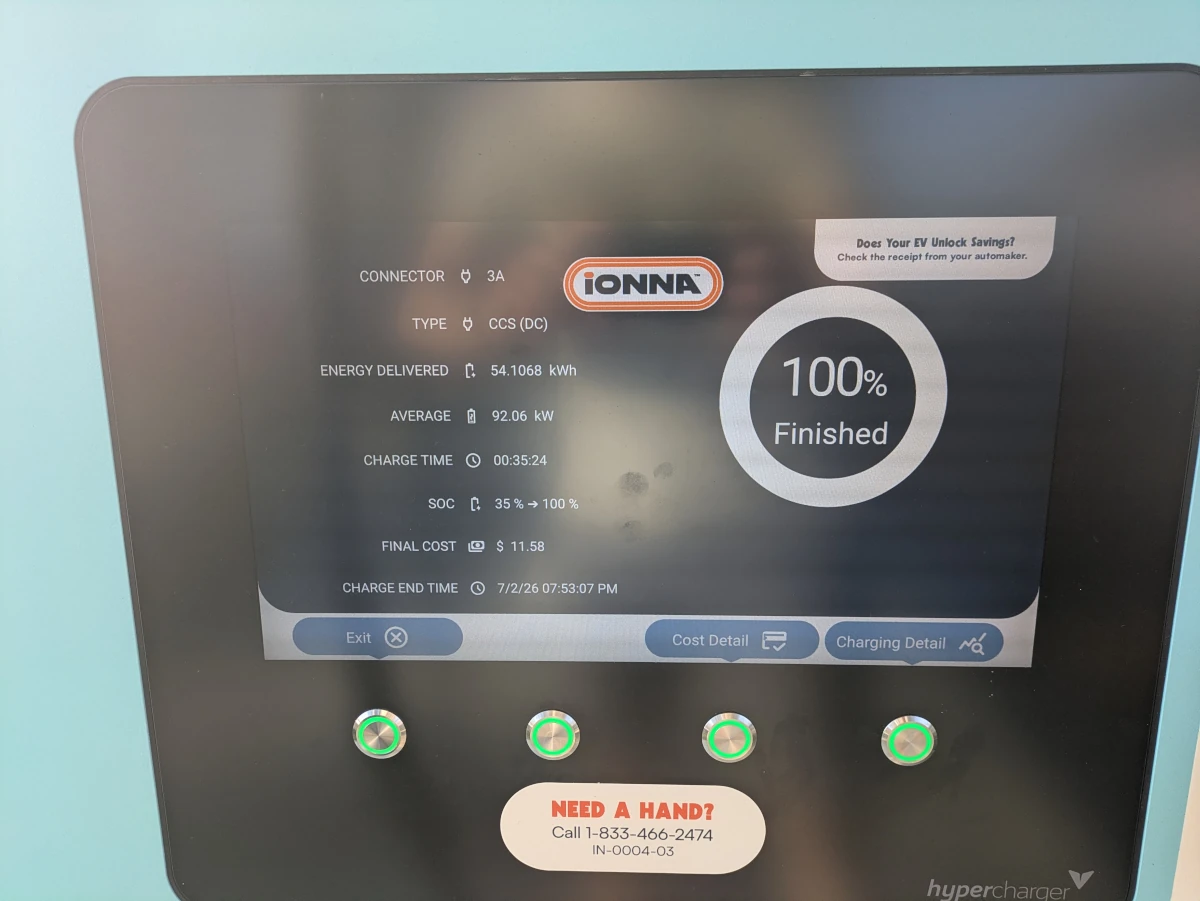
Back at Ionna Lafayette, IN - 35% to 100% for $11.58 in 35 minutes. This was thanks to the 20 cents per kWh sale for this brand new station, and since we were eating dinner, we ended up letting the car fully charge. So this was a longer charging stop, but not because of the car!
Stop 5 - Electrify America in Rosemont
Only Because We’re Renting
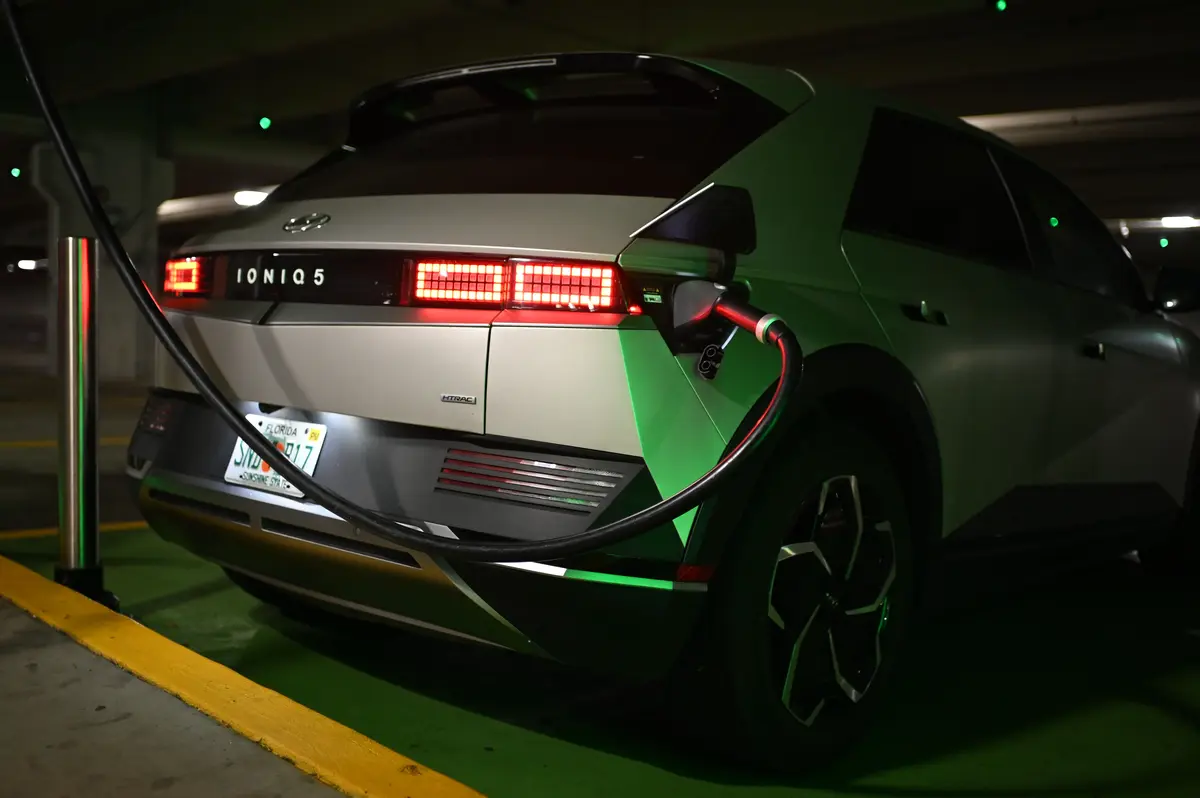
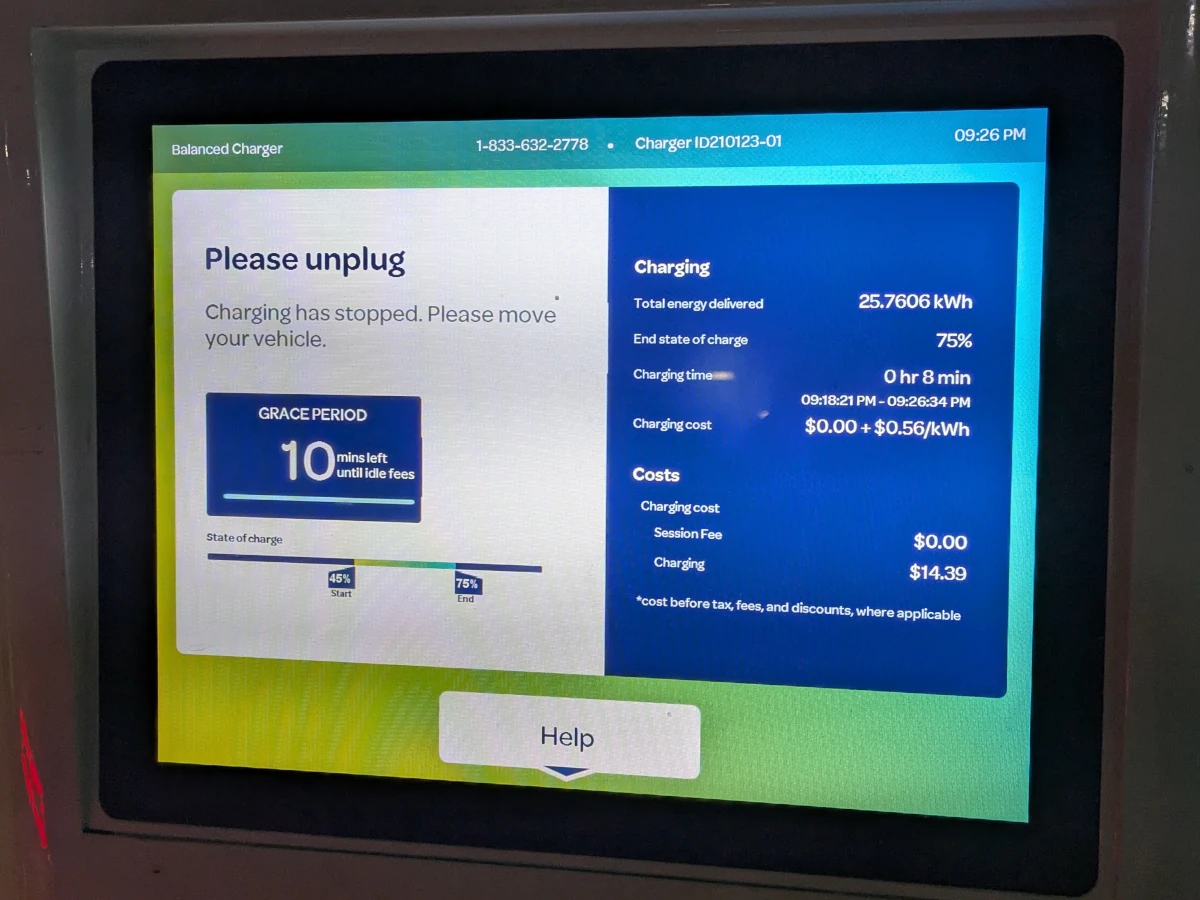
Just one last stop, but only because this was a rental car! With this rental (and likely most) we needed to return the car at over 70% charge, so after 143 miles of driving we ended up back at the Electrify America Station in Rosemont at the Fashion Outlets that we started at. We arrived with 46% charge, and we charged up to 75% in just 8 minutes for $14.39!
Back in Chicago
And voila - it was just a few miles to the airport from Rosemont, and we were back in Chicago with the rental car returned!
Our Final Costs & Time
Looking at the car’s odometer, which started at 36,082 miles and ended at 37,034 miles, this road trip covered a whopping 952 miles! Let’s break down what that cost us.
| Charging Stop | Charge | Energy | Cost | Cost/kWh | Time |
|---|---|---|---|---|---|
| Electrify America Rosemont, IL |
16% → 92% | 61.7 kWh | $34.49 | $0.56 | 27 min |
| Ionna Lafayette, IN |
22% → 99% | 65.6 kWh | $14.05 | $0.20 | 42 min |
| Electrify America Clarksville, IN |
26% → 97% | 59.7 kWh | $30.88 | $0.52 | 33 min |
| Pilot Flying J Sonora, KY |
43% → 86% | 35.8 kWh | $26.23 | $0.69 | 14 min |
| Pilot Flying J Waddy, KY |
24% → 82% | 49.4 kWh | $36.16 | $0.69 | 18 min |
| Electrify America Indianapolis, IN |
19% → 65% | 38.2 kWh | $22.92 | $0.60 | 13 min |
| Ionna Lafayette, IN |
35% → 100% | 54.1 kWh | $11.58 | $0.20 | 35 min |
| Electrify America Rosemont, IL |
46% → 75% | 25.8 kWh | $14.39 | $0.56 | 8 min |
| Total | 390 kWh | $190.70 | 3 hr 10 min |
Some Costs To Compare
To cover 952 miles in an average gas car, with 25 mpg, you’d be buying 38 gallons of gas. At the current national average of around $4, that’s $152 in gas. So our EV roadtrip cost us a bit more than driving a gas car the equivalent distance, but with home charging (at the ComEd rate of 15 cents per kWh), our 390 kWh could cost just around $58.50, $94 cheaper than the gas equivalent, around one third the cost!
This reflects an important thing about EV ownership: EVs save you money primarily from charging cheaply (and more slowly) at home, but the high-powered and high-tech fast chargers cost a ton of money to build and maintain, so they bill you more to charge.
Caveats / Why It Was So Expensive
A few caveats here:
- Except for charging in Rosemont at the start and end of our journey, we almost always needed to stop anyway - whether to use the bathroom or to eat, I never found that we really had to stop for the car. By the time we were pulling up to the charging station, I usually had to use the bathroom, or me or my brother were hungry.
- Because the rental started with 18% charge, we had to make an extra $35 and 27 minute initial charging stop - our first stop in Rosemont was only because we got a low charge car. Normally you’d start a trip with 70 - 80% charge.
- Our last charging stop was only because it’s a rental - Since Budget requires EVs be returned with 70% state of charge, we similarly made a second stop at Rosemont before returning to top up the car.
If you own an EV, you want to charge at home or at slower chargers as much as possible to save money. In Chicago with ComEd it’s estimated you’ll pay around 15 cents per kWh. Since at the two Pilot Flying J locations we were paying $0.69/kWh (plus tax) that means charging at home costs less than a quarter of what it cost at our most expensive charger.
A lot of folks also use ComEd’s hourly pricing program which makes it cheaper to charge overnight, when demand is lower, which can bring the cost to charge your EV as low as 8 cents per kWh, meaning we’d only pay $6.24 to fully charge the Ioniq 5 I was driving if I were charging at home!
In short, the financial benefits of driving electric comes primarily from home charging - you shouldn’t expect to see big savings when you’re on a road trip, but prioritizing cheaper fast chargers, hotels with cheaper Level 2 chargers, or getting a membership to the charging network you use most often can make it a lot cheaper. For example, Electrify America has a Pass+ subscription where you pay $84 a year to get a 25% discount on charging. Since I spent $102.68 just at Electrify America stations, I could have saved $25 just on this trip, and if I had that membership I’d probably try to make each stop at an Electrify America station (except the heavily discounted Ionna station).
What It Actually Felt Like
I’m a big numbers guy, so I think having all the data on what a road trip really looks like is helpful, and I hope it helps you understand what it was like! But it’s also important to emphasize the subjective experience here too - we were very rarely stopping just for the car (except our initial and final charges of each day) and were rarely waiting on the car. Some people are good at driving for six hours without a break, but that’s not really my cup of tea. After two hours, especially in the summer heat, I usually need to use the bathroom and appreciate a break to stretch my legs. And since the car charged so quickly, using the bathroom and grabbing a snack was plenty of the time for the car to charge.
Or put more concisely: road tripping in a good EV isn’t any more inconvenient for most people than a typical gas car.
Tips For Renting An EV
-
Find A Charger Near The Rental Location - most rental companies require a car to be returned at a certain state of charge (typically over 70% or 80%), and that can be a little hard to game out if you’re coming from further away. Finding a charger near the rental location makes that easier, and can help you charge up the car if they give you one with a low charge and don’t have any other ones available.
-
Don’t Expect A Home Charger - I’ve done a bunch of EV rentals now and it was a real toss up whether the car came with a charger that you could plug in. If you’re renting an EV and want to charge it at your house, make sure you check the car you get has one!
-
Check What Charging Port The Car Has - if you get a Tesla, you know for sure it has the NACS port that Tesla invented, but other cars, including the Ioniq 5, used to have the CCS port and thus require an adapter to charge at Tesla superchargers. Just pop open the charge door when you get your rental car and check what charging standard it uses!
Getting Into An EV
Are you or someone you know ready to get into an electric vehicle? Here’s a few tips!
Know How You Use Your Car
If you’re in a two-car household, maybe you want an EV to replace a commuter car - so you can settle for something older with lower range and slower charging speeds, to save money. But if you like road tripping, make sure you pay attention to the range as well as the charging speed and charging time (often cited as the time to charge from 10% - 80%) of the EVs you’re interested in.
As an example, our Ioniq 5 charged from 10 - 80% in 18 minutes, while an older Chevy Bolt takes 53 minutes, and their newly redesigned 2026 model takes only 25 minutes!
Look At The Used Market!
A lot of people talk about EVs being more expensive than gas cars, but this is only true for new EVs! Because they are still changing a lot, are more tech-forward, and people have hesitations around battery longevity, a lot of EVs depreciate faster than their gas counterparts right now. But most EVs are warrantied for 100,000 miles on their battery, and last much much longer than that. A friend of mine bought a 100,000-mile used Tesla Model 3 several years ago, and has had absolutely no issues with it.
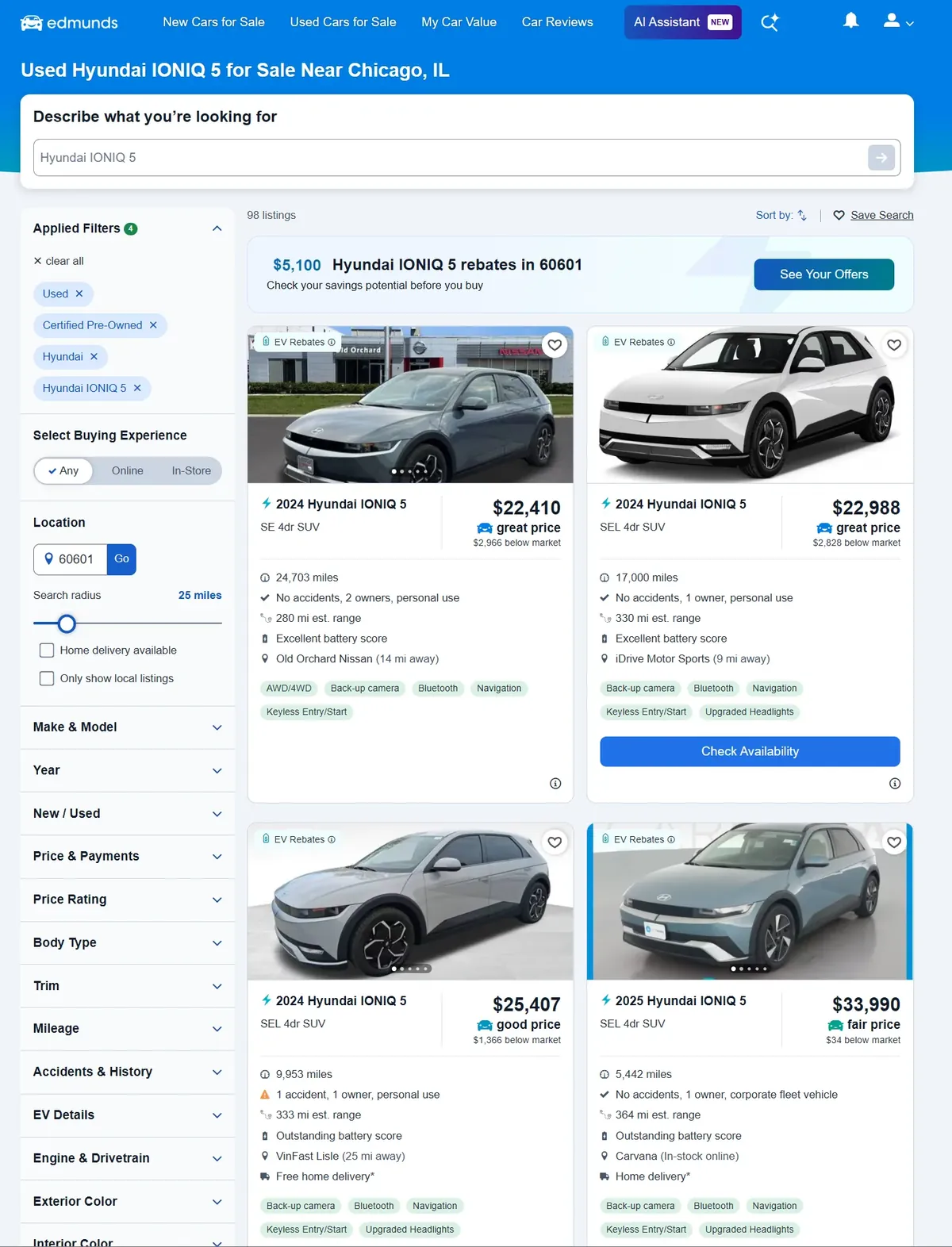
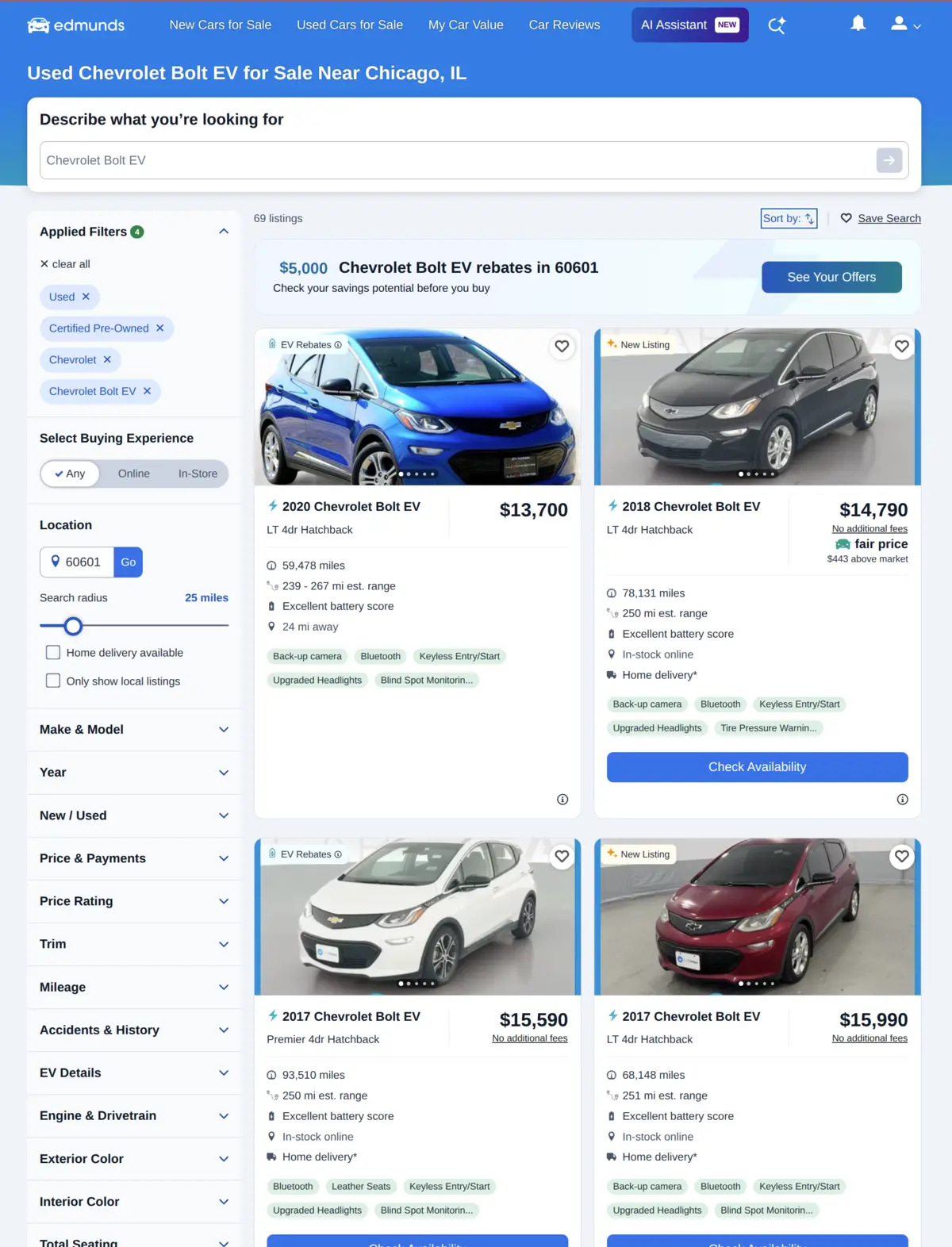
As an example, here’s some listings for used Hyundai Ioniq 5 EVs, with many under $23,000 with only 24,000 miles on them! And if you just want more of a city car, the deals get even better with used Chevy Bolts, with older models under $14,000! These charge more slowly, but still have a pretty good 250-mile range.
Don’t Think You Need A Level 2 Charger At Home
Charging an EV on a standard household outlet is called Level 1 charging, while a higher powered 240V outlet can be used for what’s called Level 2 charging. But unless you drive a lot every day you probably don’t need a Level 2 charger! Level 1 chargers give you 3 - 5 miles per hour of charge, but overnight for say, 10 hours, that means you’ll get 30 - 50 miles back.
To learn more, check out this quick video from This Old House, which dives into it more:
And if you can’t charge at home, you can still go electric, but you won’t save as much money. Since most EVs have 300 miles of range, if you live in a city, you probably will only need to charge say, once a week, depending on how much you drive.
If you do drive daily to work, see if your workplace has or can install a Level 2 EV charger - many parking garages in downtown Chicago have them, for example, letting you charge your car relatively affordably during the work day!
Check for Rebates
A lot of states have rebates for EVs or EV chargers. In Illinois, ComEd has a rebate for EV chargers that can give $750 or $2,500 towards a charger and installation, depending on your income and community.
Talk to An Existing EV Owner
If you have questions or concerns about going electric, the best way to learn more is to talk to a neighbor, friend, or family member who already has an electric car. They can tell you about their specific vehicle, how they manage charging, and take you for a drive!
Wrapping Up
I hope this deep dive into my road trip was helpful, and shows you just how doable road tripping in an EV can be! I’ve been driving electric for years now, and it’s gotten easier every year, as cars charge faster and chargers become more commonplace.
And if you found the article helpful, share it with a friend!
Appendix
Terminology
-
kilowatt (kW) - a unit of power, roughly equal to the instantaneous power draw of a microwave. EV charging speeds are in kilowatts, with many modern EVs able to hit over 100 kW on compatible chargers.
-
kilowatt hour (kWh) - a unit of energy. As a rough heuristic, about the energy it takes to run a microwave for an hour. One kWh can usually take you a few miles in an EV. EV batteries often range from 40 kWh in smaller cars to up to even 205 kWh in large pickup trucks, and even bigger in larger vehicles.
-
Level 1/2/3 Charging - categories for EV charging speeds. Level 1 is the slowest charging speed, from a common household outlet, while Level 3 is the fastest, found just at dedicated fast-charging sites, and Level 2 is a middle-ground that requires running a dedicated 240-volt circuit, but is fairly common. Learn more from Car and Driver.
-
800-volt architecture - the voltage an EV’s battery system runs at. Most EVs use around 400 volts, but a few (like the Hyundai/Kia EVs, including the Ioniq 5, Ioniq 9, EV6, and EV9) use 800 volts. Higher voltage systems let the car pull more power without more heat, which is why these cars can charge faster than typical 400-volt cars.
-
CCS (Combined Charging System) - the fast-charging plug most non-Tesla EVs in the US used until around 2025 & 2026, when other cars started supporting NACS (the Tesla plug). CCS cars need an adapter to use Tesla Superchargers & home chargers. Learn More About NACS vs CCS.
-
NACS (North American Charging Standard) - the plug type Tesla invented, now being adopted across the industry as the US standard. These are smaller, making cables easier to manage. As of late 2026, more and more non-Tesla EVs in North America ship with an NACS port, which also often means they can use Tesla Superchargers without an adapter, though Tesla has to add support for automakers individually. Learn More About NACS vs CCS.